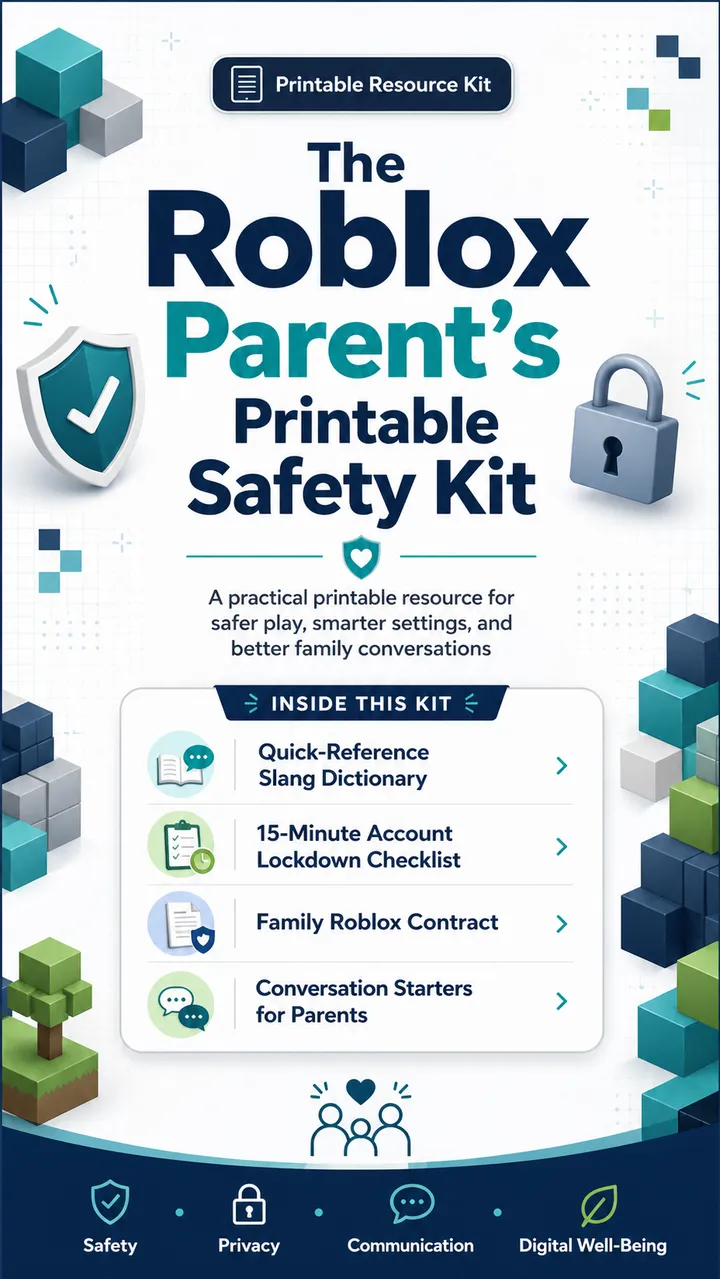
Talking to Your Kid About Roblox: 20+ Conversation Starters
By: Roblox Radar Team Last updated: March 2026 · Reading time: ~16 minutes
---
Roblox is more than just a game. For the modern child, it is a primary social square, a creative outlet, and a complex digital economy. With over 66 million daily active users, it has become the "new mall" where kids hang out, express their identities through avatars, and learn the basics of game design and entrepreneurship.
However, the sheer scale of Roblox can be overwhelming for parents. This guide is designed to bridge the communication gap, providing you with the context you need to have meaningful, empathetic, and protective conversations with your child.
---
Table of Contents
- Understanding the Roblox Ecosystem
- Category A: Show & Tell Starters
- Category B: Social & Community Starters
- Category C: Logic & Learning Starters
- Category D: Boundaries & Balance Starters
- Deep Dive: Roblox Safety for Parents
- Tips for Maximizing These Conversations
- Conclusion: Building a Digital Bridge
---
Understanding the Roblox Ecosystem
Before diving into the conversation starters, it's helpful to understand what your child is actually doing. Roblox is a platform, not a single game. Think of it like YouTube, but for interactive experiences.
Key Concepts to Know
- The Avatar: This is your child's digital self. Buying "skins" or accessories isn't just about vanity — it's about social standing and self-expression.
- Robux: The virtual currency. While the platform is "free to play," almost every game is designed with micro-transactions in mind.
- Experiences: These are the games themselves. They range from "Roleplay" (living a life in a virtual city) to "Obbies" (challenging obstacle courses) and "Simulators" (clicking to gain power or collect pets).
---
Category A: The "Show & Tell" Starters
Goal: To build interest and let your child feel like the expert. This establishes a "no-judgment zone" for future, harder conversations.
- "If you had to pick one game on Roblox to show someone who has never played before, which one would it be and why?"
Why it works: Helps you identify what genre they enjoy — competition, or peaceful roleplaying?
- "Can you show me your avatar? What made you choose that specific look or outfit?"
Why it works: Opens a window into their self-perception. Are they trying to look cool, funny, or like a specific character?
- "What's the coolest thing you've ever built or achieved in a game like Adopt Me! or Bloxburg?"
Why it works: Many games involve building houses or managing resources. This highlights their creativity and persistence.
- "I've heard about 'Obbies' (obstacle courses). Are they as hard as they look? Can you show me how you beat one?"
Why it works: Obbies require motor skills and patience. Watching them play lets you praise their focus and resilience.
- "Who is your favorite Roblox YouTuber or creator right now? What makes their videos fun to watch?"
Why it works: Creators shape the culture. Knowing who they watch helps you monitor the "vibe" of the content they consume.
---
Goal: To monitor their social circle without appearing like a "spy." Roblox is highly social, and this is where most risks — bullying, grooming — reside.
- "Who do you usually play with? Are they friends from school or people you met online?"
Why it works: You need to know if they are interacting with strangers. If they are playing with "online-only" friends, it's a cue to discuss "Stranger Danger 2.0" rules.
- "Have you ever seen someone being mean or a 'troll' in a chat? How did the other players handle it?"
Why it works: Tests their digital literacy. Do they recognize toxic behavior and know how to use Mute or Report?
- "If a stranger sends you a friend request or starts asking personal questions, what's your 'game plan' for staying safe?"
Why it works: This is proactive safety — it moves from "Don't do that" to "What is your plan?" which empowers the child.
- "Do you and your friends have a favorite 'hangout' spot in Roblox where you just go to talk?"
Why it works: Roleplay games like Brookhaven are often used just for chatting. This helps you understand where the "action" is happening.
- "Has anyone ever been really helpful or kind to you in a game? What did they do?"
Why it works: Acknowledging positives encourages them to be a "Good Digital Citizen" themselves.
---
Category C: The "Logic & Learning" Starters
Goal: To tap into the educational potential of the platform. Roblox can teach coding, economics, and problem-solving.
- "I know some people make their own games on Roblox. If you were going to design a game, what would the goal be?"
Why it works: Shifts them from consumer to creator. It might spark interest in Roblox Studio, the actual game-making software.
- "How do 'Robux' work? If you had 1,000 Robux right now, what would be the smartest way to spend them?"
Why it works: A lesson in financial literacy and "Value vs. Hype." Discussing "Limited" items can teach supply and demand.
- "Does playing Roblox ever help you solve problems or puzzles in real life?"
Why it works: Many games require complex logic (like Doors or Piggy). Highlighting this makes gaming time feel productive.
- "I noticed you were trading items earlier. How do you decide if a trade is fair or if someone is trying to trick you?"
Why it works: Trading scams are rampant on Roblox. This helps them develop critical thinking and healthy skepticism.
- "What's the most complicated rule in your favorite game? Can you explain it to me?"
Why it works: Explaining complex systems requires high-level communication and cognitive processing.
---
Category D: The "Boundaries & Balance" Starters
Goal: To manage screen time and emotional regulation. Gaming can be addictive and sometimes frustrating.
- "What's the most frustrating part of Roblox? Does it ever make you feel stressed or upset?"
Why it works: Some games are designed to be "sticky" or frustrating to encourage spending. Helping them identify "Tilt" (gaming frustration) is a vital life skill.
- "If we decided to have a 'No-Roblox' day, what's the first real-world activity you'd want to do instead?"
Why it works: Keeps them grounded in the physical world and reminds them that Roblox is just one part of their life.
- "Do you ever feel like you've been playing for five minutes, but it's actually been an hour? How can we help you keep track of time?"
Why it works: A collaborative approach to screen time — you become a "Partner" in time management, not the "Police."
- "Is there anything about the games you play that you think might be too scary or 'grown-up' for younger kids?"
Why it works: Develops their moral compass and gives them a chance to tell you if they've seen something "weird" without getting in trouble.
- "If I wanted to play a game with you this weekend, which one should we play together so I don't look like a total 'noob'?"
Why it works: The ultimate bonding move. It shows you respect their world enough to want to participate in it.
---
Deep Dive into Roblox Safety for Parents
While the conversation starters build trust, you also need technical and situational awareness.
The "Big Three" Risks
- Scams (The "Free Robux" Trap): No one ever gives away Robux for free. Sites or games that promise this are phishing for passwords. Teach your child: "If it's too good to be true, it's a scam."
- Online Dating (ODing): Despite Roblox's best efforts, "ODing" occurs in roleplay games. This can lead to inappropriate conversations. Watch for avatars "dating" or using "bypassed" language.
- Third-Party Apps (Discord/TikTok): Predators often try to move the conversation from Roblox (which has strict filters) to Discord or Snapchat. Rule #1: Never move the conversation to another app.
Setting Up Parental Controls
Don't just rely on talk — use the tools provided:
- Account PIN: Prevents your child from changing the safety settings you've put in place.
- Chat Restrictions: You can turn off chat entirely or limit it to "Friends Only."
- Age-Based Content Tiers: Roblox now has 9+, 13+, and 17+ ratings. Ensure their account reflects their actual age so they aren't exposed to content beyond their maturity level.
---
Tips for Maximizing These Conversations
The "Car Ride" Strategy
Sometimes, the best conversations happen when you aren't looking each other in the eye. Ask these questions while driving or doing dishes to lower the pressure.
Validate Their Feelings
If they lose a "Legendary Pet" in a trade, it feels like losing $100 to them. Don't say "It's just a game." Instead, say "I can see why that's really upsetting. Let's talk about how to prevent it next time."
Be a "Noob" on Purpose
Kids love being the teacher. If you act like you don't know how to move your character or jump, they will take great pride in showing you the ropes. This flips the power dynamic in a healthy way.
Watch for "The Drift"
If your child suddenly becomes secretive about their screen, changes their password, or starts getting angry when they aren't playing, use the prompts in Category D immediately.
---
Conclusion: Building a Digital Bridge
Roblox is a tool for connection. By using these conversation starters, you aren't just "monitoring" a gamer — you are parenting a child in a digital age. You are showing them that you value their hobbies, you respect their expertise, and most importantly, you are a safe harbor they can turn to when the internet gets weird.
> Keep the dialogue open, keep your own avatar ready, and remember: your presence in their digital world is the best parental control there is.
---
Related Articles: